If I had a time machine, I would travel to 1940, the year the first Tom and Jerry cartoon was released. The short film Puss Gets the Boot introduced the famous cat-and-mouse competition and marked the beginning of one of the most influential animation series in history. William Hanna and Joseph Barbera directed the cartoon while working at the studio Metro-Goldwyn-Mayer. So, if I could travel back in time, I would want to be an understudy to Hanna and Barbera and learn how they animated movement and expressions frame by frame.
This era of animation is my favourite because it represents the Golden Age of hand-drawn cartoons. Every movement had to be drawn manually on animation cels, often requiring HUNDREDS of drawings for a few seconds of motion. The artists focused heavily on timing, exaggeration, and physical comedy, creating expressive characters without relying on dialogue. The fluid movement and detailed backgrounds from this period still look beautiful today.
The influence of this era on the modern world is enormous. Techniques developed by early animators helped establish the foundations of modern animation, storytelling, and character design. Even today, digital animation and CGI still rely on principles that were refined in the 1940s, such as squash and stretch, anticipation, and visual timing. Many contemporary animated films, video games, and motion graphics continue to borrow from the style and storytelling techniques pioneered by these early cartoons.
Travelling back to this time would allow me to witness the birth of animation techniques that still inspire artists and designers today.
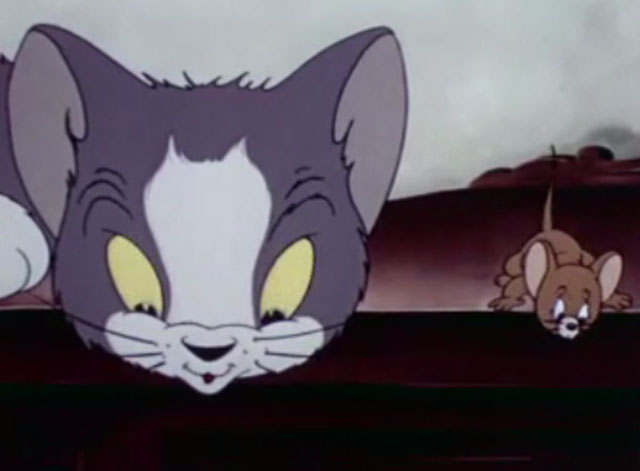
Puss Gets the Boot 1940
Image from cinemacats.com
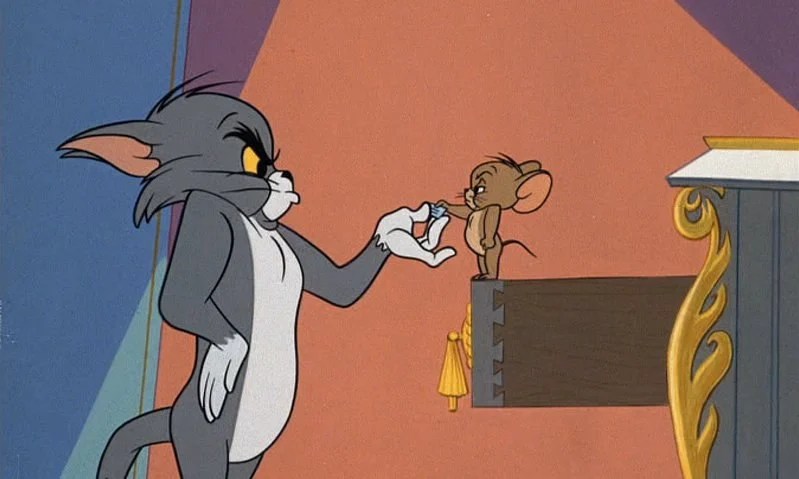
Image from awn.com
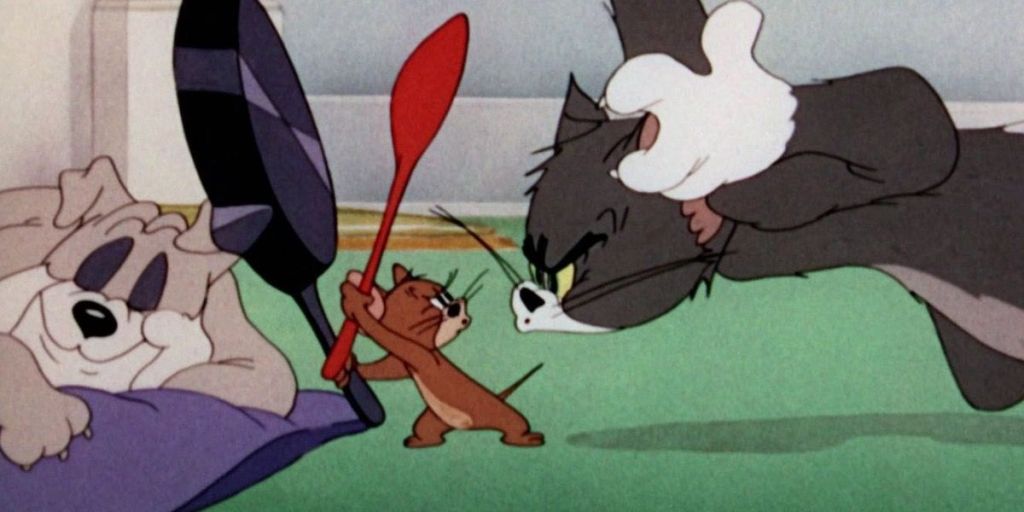
Quiet Please! 1945
Image from cbr.com
 Idilija's reflective journal
Leave a comment