Ikko Tanaka (1930–2002) was a Japanese graphic designer renowned for blending contemporary design principles with traditional Japanese aesthetics. Born in Nara, Japan, he studied at the Kyoto City School of Fine Arts and became involved in modern theatre, joining a theatrical study group called Atelier-za.
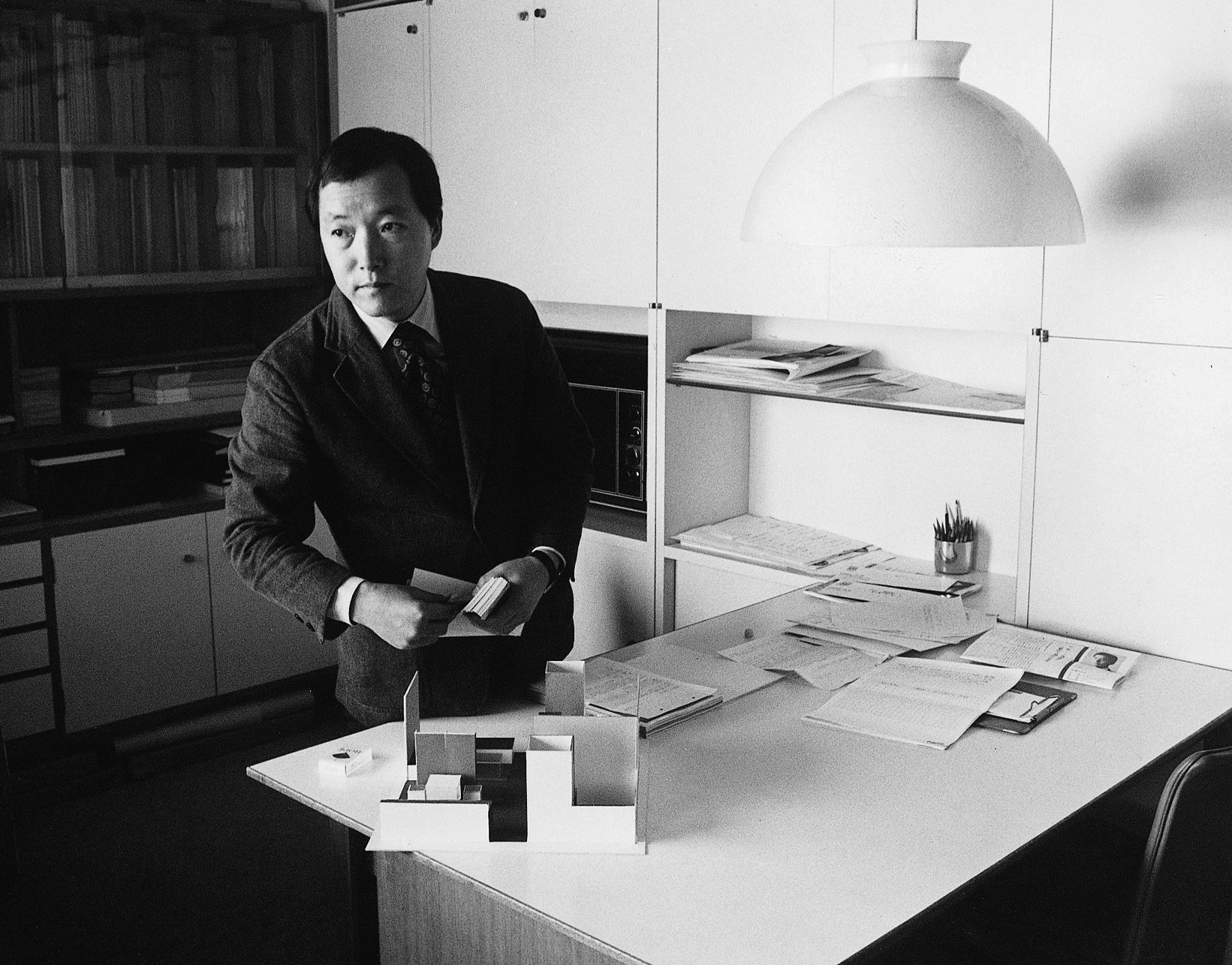
Tanaka began working professionally as a designer in the 1950s. He was deeply skilled in both Japanese and Western visual languages, often favoring minimalism over realism. In 1963, he founded the Ikko Tanaka Design Studio in Tokyo, where he worked with major clients such as Mazda, Issey Miyake, and the International Garden and Greenery Exhibition.
According to The New York Times article “Ikko Tanaka, 71, Japanese Graphic Designer”, “Tanaka borrowed simple forms and patterns from ancient visual arts and incorporated them into designs that truly reflected their time and place.”
Throughout the 1970s and beyond, Tanaka emerged as a central figure in commercial art. He edited influential books like Japanese Style and Japanese Color, which were published in the United States, sharing Japanese design philosophy with international audiences.
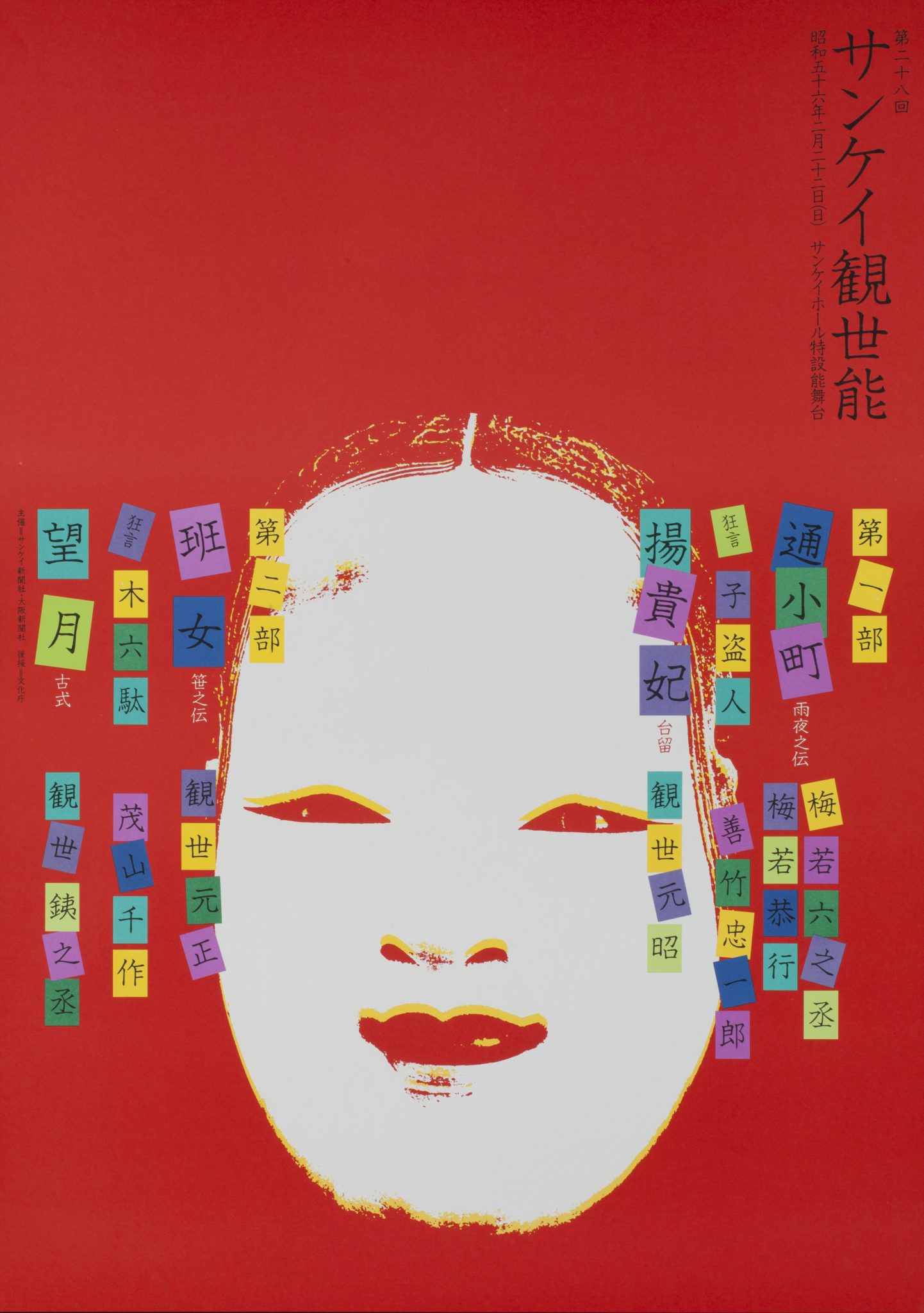
Theatre and dramatic arts remained an essential part of his creative life. He designed many posters for performances by the Nihon Buyo and the Asian Performing Arts Institute, infusing visual drama into his work.
Tanaka was also the co-creator and first art director of MUJI, the minimalist Japanese retail company. He developed MUJI’s visual identity by incorporating natural graphic motifs and forms into monochromatic backgrounds. His early visuals for the brand emphasized minimalist illustration and simple, impactful slogans.

In his poster work, Tanaka often experimented with typography—merging Latin and Kanji characters not merely for decoration, but to serve as key components of the message he aimed to communicate. His designs maintained a balance of harmony, tradition, and innovation.
Beyond posters and branding, Tanaka created logos, packaging, and collaborated across industries with figures like Hanae Mori and Issey Miyake. His influence extended far and wide, earning him numerous honors such as the Mainichi Design Award and the Tokyo Art Directors Club Award.
Ikko Tanaka passed away in Tokyo in 2002 at the age of 71. His legacy lives on as one of the most influential figures in graphic design. Through his work, he bridged Eastern and Western design philosophies—honoring cultural heritage while embracing modern innovation. His legacy continues to inspire designers around the world today.
Sources: https://umma.umich.edu/groups/ikko-tanaka-artist-biographical-backgrounds/
http://www.designishistory.com/1960/ikko-tanaka/
https://grafismasakini.com/article/ikko-tanaka-revitalizing-japanese-tradition-in-modern-design/en
 Idilija's reflective journal
Leave a comment